Tetanus, an infection caused by a toxin in Clostridium tetani bacteria that contain endospores which are produced in the ground that can enter the bloodstream through a human wound puncture. This bacteria can cause toxic shock syndrome in humans due to its effects of the brain and the nervous system. The symptoms are mainly stiffened muscles, and more specifically locked jaw, difficulty swallowing, fever, spasms, and sweating. However, tetanus is preventable with vaccines. There are four types of vaccines available. According to the CDC website, these include:
- Diphtheria and tetanus (DT)
- Diphtheria, tetanus, and pertussis (DTaP)
- Tetanus and diphtheria (Td)
- Tetanus, diphtheria, and pertussis (Tdap)
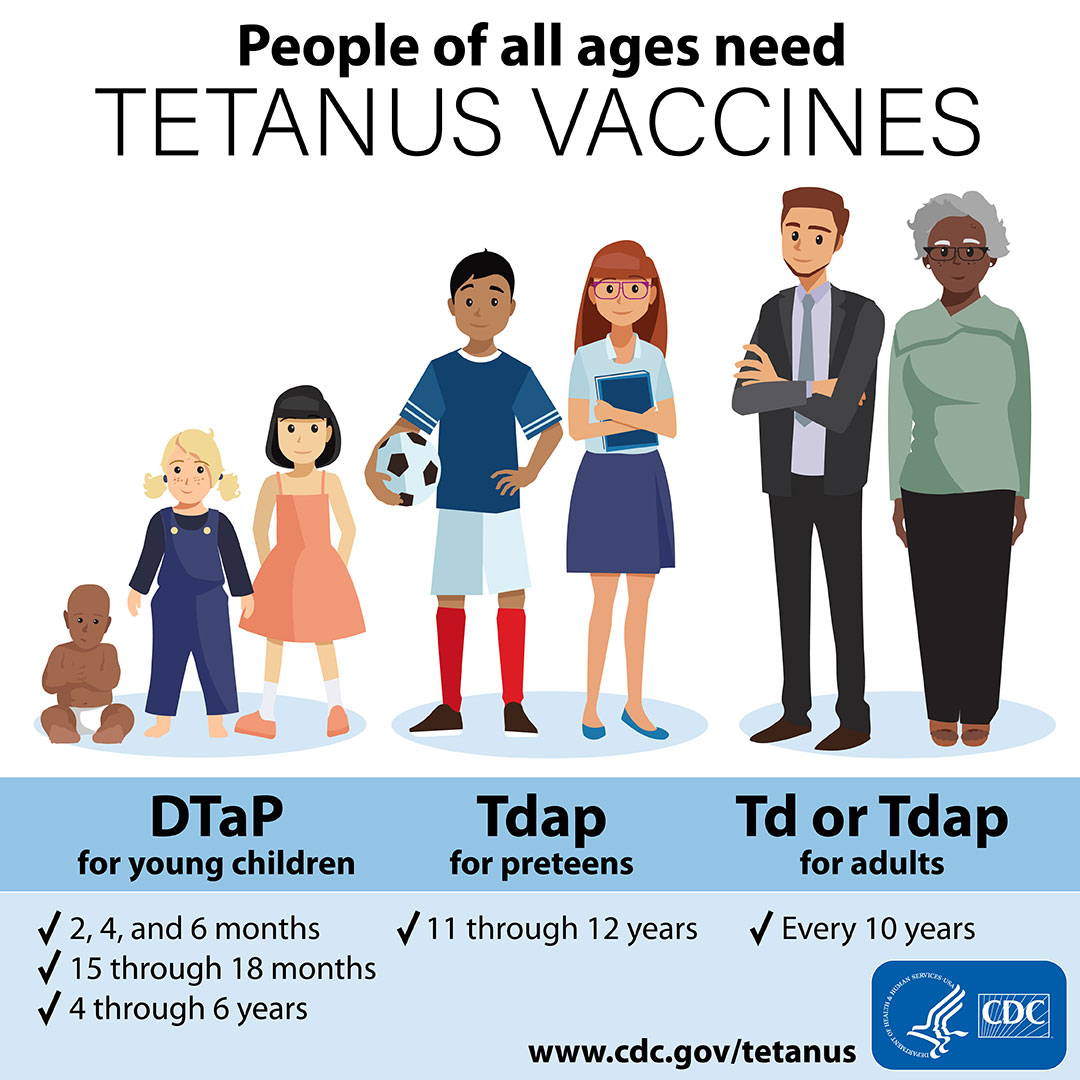
Babies and children under the age of 6 receive DTaP or DT, while older children and adults receive Tdap and Td. These vaccines provide protection from multiple diseases including: tetanus, diphtheria, whooping cough, or pertussis. These vaccines are safe and are recommended for 3 shots for babies, two boosters for children, another booster for preteens, and adults. Even pregnant women should get the Tdap vaccine during the early part of the 3rd trimester to protect baby from whooping cough.
:max_bytes(150000):strip_icc()/booster-shots-1298291-01-0d94f27560be41bb9035802ef575e5f6.png)
According to an article written by Melissa Conrad Stoppler, MD, the tetanus vaccine is a toxoid, inactivated toxin that is released into the body. The vaccines last approximately 10 years. However, a booster is recommended if someone develops a deep punctured wound after 5 years since the last dose. The level of antitoxins falls in the body over time, immunity to the bacteria decreases. This vaccine is proven to be almost 100% effective in preventing tetanus. The number of countries that face occurrences of this disease has significantly dropped due to the increase in vaccination.

 Lexie's MCRO blog